Local Area Network Explained: Types, Benefits, and Use Cases
Local Area Network
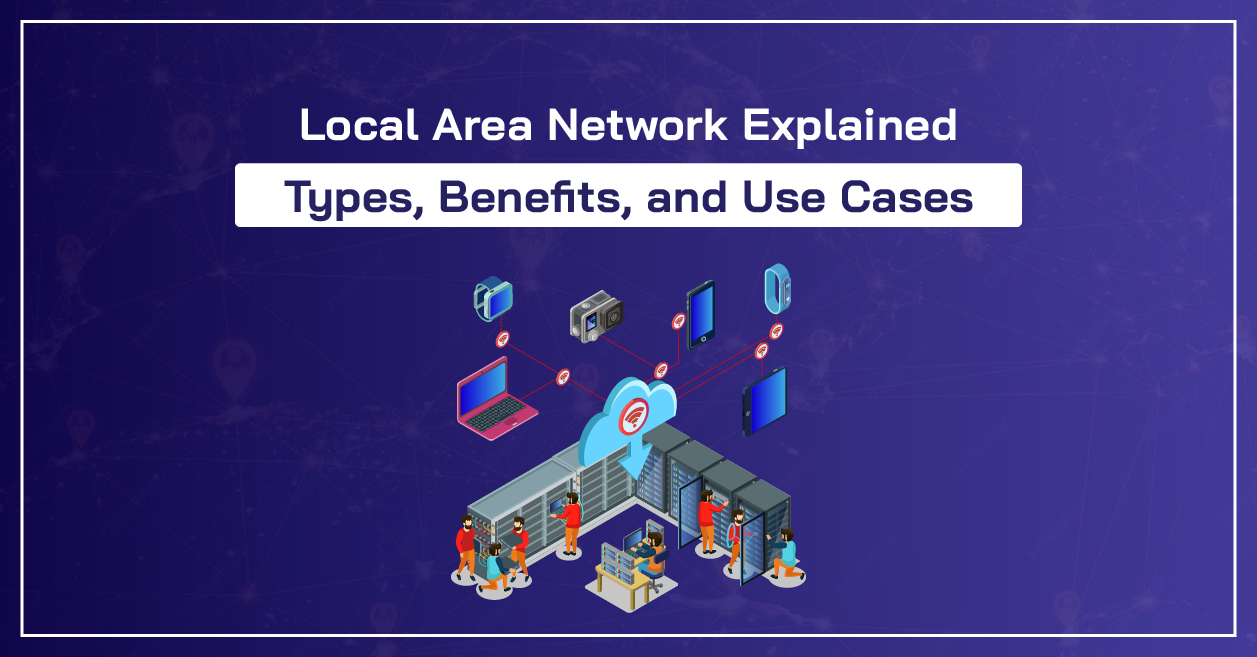
In today’s world, Local Area Network (LAN) is important for connecting devices in small places like homes, offices, or schools. A LAN lets devices like computers and printers share resources easily. Whether wired or wireless, LANs help with communication and organizing data in one place, which improves work and teamwork. So in this article, we will explain what LANs are, how they work, and the different types. As well as we will also explain their benefits, and the parts needed to set up a LAN. Understanding LAN technology helps improve connectivity and make networks work better in any environment.
What is a Local Area Network?
A local area network is a type of network that connects computers as well as other devices within a small, specific area. Like a house, an office, or a college campus. LANs allow these devices to share things like files, printers, and internet connections. Usually, LANs are limited to just one building or a few nearby buildings. Which makes them different from larger networks that cover bigger distances, called wide area networks (WANs).
Understand LAN Technology - How It Works?
LAN technology uses a variety of physical devices and protocols to allow communication between connected devices. Ethernet is one of the most common technologies used for wired LANs, while Wi-Fi enables wireless communication. Switches, routers, and hubs are essential components that facilitate the connection between devices and ensure efficient data flow.
LANs can be wired or wireless, with wired LANs using Ethernet cables for a reliable connection and wireless LANs relying on Wi-Fi signals to enable mobility and flexibility.
Local Area Network Types
While all LANs serve the primary purpose of connecting devices in a small area, they can differ in terms of setup, infrastructure, and technology. The two main types of local area network (LAN) are:
Wired LAN (Ethernet LAN)
In a wired LAN, devices are connected using cables, usually Ethernet cables, to a central switch or hub. Wired LANs provide faster speeds and more stable connections because they are less affected by interference. These are often used in offices, data centers, and places that need secure and high-speed networks.
Wireless LAN (Wi-Fi LAN)
A wireless LAN connects devices using Wi-Fi, giving users more freedom to move around. Wi-Fi LANs are generally great for homes, coffee shops, and public places where people need to move without being tied to one spot. While they are more easily affected by interference than wired LANs. New Wi-Fi technology has greatly improved their speed and reliability.
If you want to learn more about modern technology, consider taking an IoT certification course by The IoT Academy. Knowing how LAN helps devices to connect is important for IoT applications. These networks allow devices to communicate easily. By taking an IoT course, you will learn how LANs work with IoT systems, helping you improve your skills and career.
Components of a Local Area Network
To set up the LAN, we need some necessary components. These components work together to create a seamless connection between devices:
Router: A router is a device that helps send data between different networks, like your LAN and the internet. It makes sure data goes to the right place.
Switch: A switch connects several devices within the LAN. Unlike a hub, which sends data to all devices, a switch sends it only to the right device, making the network work better.
Cabling and Connectors: In a wired LAN, Ethernet cables (like Cat 5e or Cat 6) are used to connect devices to the network. These cables send data between devices through copper wires.
Access Points (APs): For wireless LANs, access points help extend the Wi-Fi signal as well as make sure it covers large areas or multiple floors of a building.
Network Interface Cards (NICs): Each device that connects to the LAN needs a network interface card (NIC). This part also helps the device communicate with the network.
Local Area Network Benefits
A LAN offers numerous advantages, whether for businesses, educational institutions, or homes. Some key benefits of LAN technology include:
Cost-Effective Resource Sharing: LANs let many devices share expensive resources like printers, storage, and the internet. Instead of buying separate devices for everyone, LAN allows you to manage these resources in one place.
Improved Communication: By connecting devices in one area, the local area network helps team members communicate better. It also makes file sharing faster and supports instant messaging, video calls, and team collaboration.
Enhanced Security: Because LANs are limited to one area, it's easier to protect them. You can use firewalls, encryption, and login systems to keep data safe.
Centralized Data Management: LANs allow businesses to keep data in one place, making it easier to store, access, and back up files. This also reduces the risk of losing data and helps things run smoothly.
Reliability and Performance: LANs offer strong performance and reliability with less interference and better control. This is especially important for businesses that need fast, stable internet.
LAN Example
A simple example of a local area network is found in most offices. Here, computers, printers, and other devices are connected to one central network. This allows employees to share files, access documents, and print from shared printers. Generally, the LAN makes it easy for everyone to use the same resources, helping them work faster and better together. For example, employees can share files, join video calls, or access company data without needing to use external drives or online storage. This setup gives the office a fast, reliable connection, making daily tasks easier and improving work productivity.
Conclusion
In conclusion, a local area network is important for connecting devices in places like homes, offices, or schools. Whether wired or wireless, LANs help share resources, improve communication, and keep data safe. As well as it manages information in one place. By learning about the types, parts, and uses of LANs, businesses, and individuals can use this technology to work better and save time. With fast and reliable connections, LANs are a key part of keeping devices connected and managing data in different environments.


